
The Packaging and Packaging Waste Regulation (PPWR) is starting to reshape how packaging is designed, used and recovered across Europe. For food, beverage and other everyday products, this makes future-ready packaging more relevant than ever: solutions need to support recyclability and evolving regulatory requirements while continuing to protect products, extend shelf life and perform reliably on customers’ packaging lines.
At Huhtamaki, our Flexible Packaging segment has prepared for this shift over several years, not only with PPWR in mind, but by looking at changing customer needs, supporting product shelf-life and circularity. [1]
We recognized that packaging would need to move from complex multi-layer structures, which can be difficult to recycle, towards mono-material solutions that are easier to sort, recycle and keep in circulation as valuable raw materials.
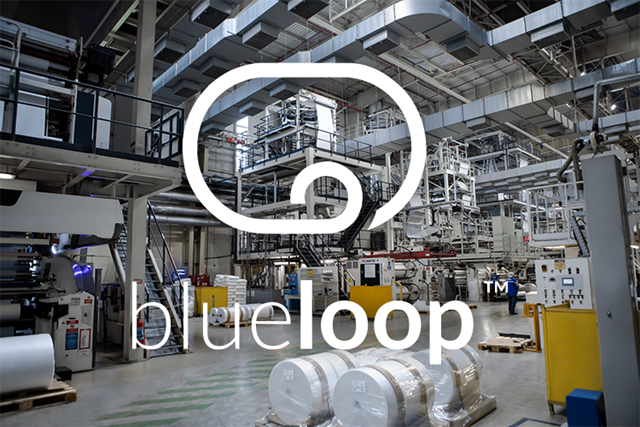
This required significant investment in new, state-of-the-art production technology capable of manufacturing mono-material flexible packaging while maintaining the barrier properties needed to protect products and preserve shelf life.
This work began well before the launch of our blueloop™ platform in 2023. Huhtamaki has designed and installed future-ready production capabilities in different regions, recognising that the regulatory changes now taking shape in Europe are likely to influence packaging requirements in other markets over time.
The blueloop™ range has been designed with recyclability in mind, while acknowledging that different applications require different solutions. For some dry products, a barrier paper solution may be the right choice. For liquids or more demanding applications, mono-material polymer plastic solutions may provide the performance needed.
Starting early has allowed Huhtamaki Flexible to work closely with equipment partners, optimize production processes and test materials on customer packaging lines. This helps ensure that future-ready solutions are not only more recyclable [2], but also functional, efficient and reliable in our customers’ operations.
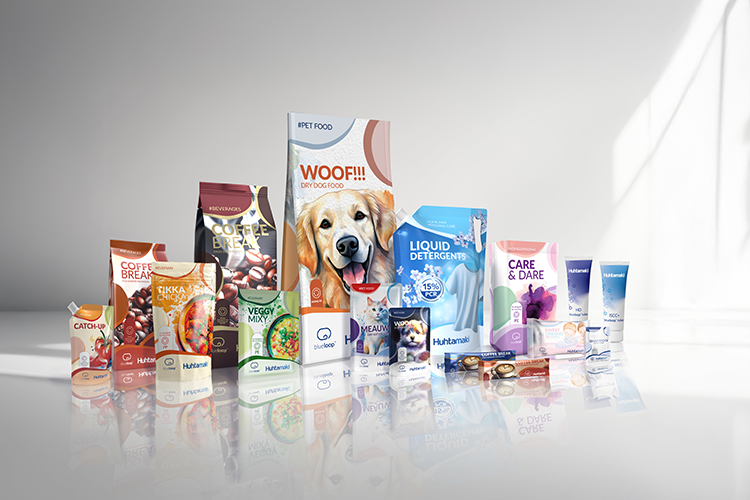
Today, many Huhtamaki barrier packaging solutions are based on more than 95% mono-material structures. This can improve their end-of-life value by making them easier to identify and recycle in appropriate recycling streams. Customers are already using these solutions across different applications, including dry soup packaging with OmniLock™ Ultra Paper, a stand-up pouch for hand wash using Huhtamaki’s mono-material PE solution, and a retortable PP solution for pet food.
This means Huhtamaki Flexible Packaging is well prepared for PPWR requirements, including restrictions on PFAS in food-contact packaging. More importantly, we are ready to support customers with solutions that help them keep their products on the market, meet evolving requirements and move towards more circular packaging. We are also introducing post-consumer recycled (PCR) materials into selected packaging solutions, including Home Care and tube laminates.
Our work goes beyond regulatory readiness. Huhtamaki is committed to reducing the climate impact of its operations and value chain, in line with its Science Based Targets initiative (SBTi) commitment to limit global temperature rise to 1.5°C. We also contribute to industry associations to support fact-based dialogue between policymakers, consumers and packaging experts.
For Huhtamaki Flexible Packaging, future-ready packaging starts with our customers’ needs. Packaging must protect products, support efficient operations, meet regulatory requirements and help customers succeed in the market. Preparing for PPWR (and other legislation) is one important part of this wider packaging strategy.
With scalable global manufacturing capabilities and a broad portfolio of flexible packaging solutions, Huhtamaki is ready to help customers adapt to the next phase of packaging.
[1] By making the material of a very high percentage of mono-material they become increasingly valuable to recyclers because the yield is purer and easier to recycle. This promotes circularity because the recycler will get more for their efforts.
[2] Here we mean valuable to the recycler. Being predominantly of a mono-material increases the quality of the yield either through the mechanical or the chemical recycling process.