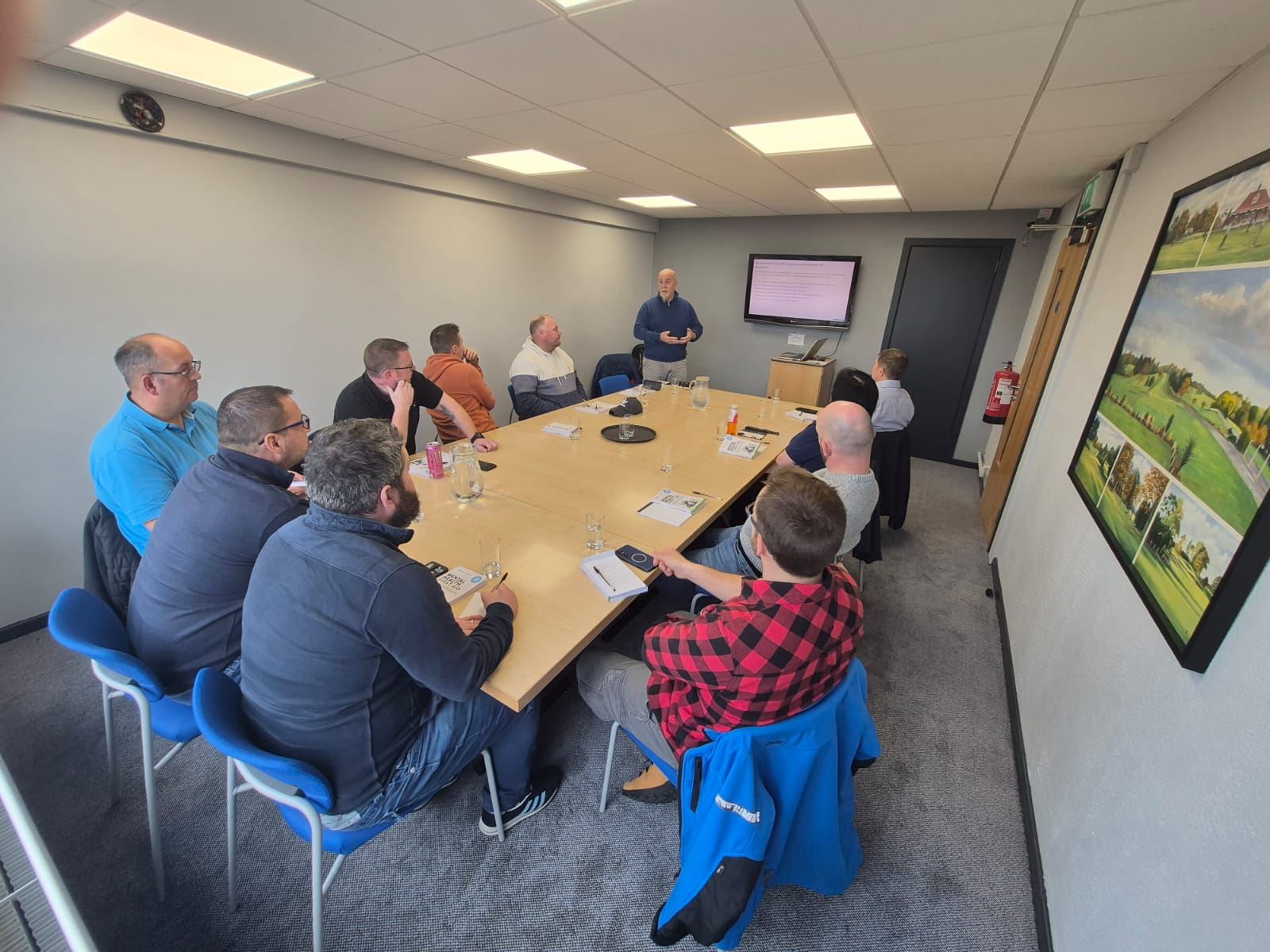
November is Men’s Health Awareness Month, and International Men’s Day on 19 November puts a spotlight on the health and wellbeing of men and boys. Mental health is a big part of that conversation. At Huhtamaki, the wellbeing of our people is closely tied to how we think about safety and care, and some of the most effective support happens in everyday conversations between colleagues. Graham Morwood, Senior Health & Safety Manager, Fiber Packaging, knows this well.
More than a decade ago, Graham trained as a Mental Health First Aider. He had seen the impact mental health challenges can have on individuals and the people close to them, and he wanted to understand how to help. That single training course grew into a team of volunteer Mental Health First Aiders at Huhtamaki’s Lurgan site. The team offers a safe, confidential space where colleagues can talk, be heard and, when needed, find professional support.
Support starts before a crisis
For Graham, meaningful support begins long before someone reaches a crisis point. As a manager, he has made a point of getting to know the people around him, whether that means asking about their family, their interests or how their football team has done at the weekend. Those everyday conversations build trust and makes it easier to notice when something is not quite right.
“You don’t need to know someone’s life story, but you need to know what makes them tick.”
That trust matters when someone is struggling. “How are you?” is a question we ask every day, but the answer isn’t always the whole story.
If you ask someone, ‘Are you okay?’ they’ll often say, ‘Yeah, I’m fine.’ Sometimes all you can do is leave the door open and let them know you’re there when they’re ready to talk.”
Sometimes, listening is the support
Over the years, the Lurgan team has supported colleagues facing a wide range of challenges, from financial worries and relationship difficulties to mental health concerns. Sometimes that means helping someone find the right professional resources. Sometimes it means sitting down over a coffee and simply listening.
That may be the most important lesson Graham has learned.
“People don’t always want advice. Most people already know what they need to do. What they often need is someone to listen and help them work through it themselves.”