

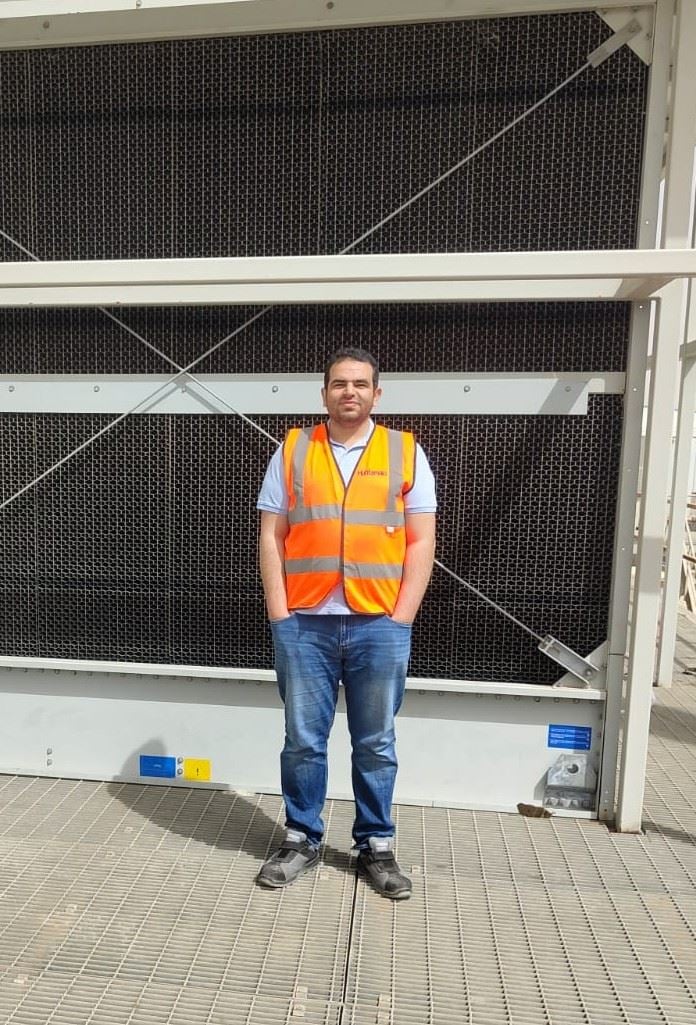
Energy efficiency is often discussed through targets and metrics, but what does it mean in practice? At Huhtamaki’s Flexible Packaging site in Cairo, Egypt, a recent cooling system upgrade shows how practical operational decisions can deliver measurable environmental benefits while supporting reliable production.
To make the topic more concrete, we spoke with Ahmed Ali, Utility Manager at the Cairo site, about the installation of a new water-cooled chiller system and what the project demonstrates about energy efficiency in action.
Built for local conditions
The starting point for the project was straightforward. Cairo is an important manufacturing location for Huhtamaki, and the region’s high temperatures create significant cooling demands throughout the year. Improving the efficiency of cooling operations therefore became a key focus area.
“When we evaluated the options, we wanted a sustainable solution for our new cooling projects,” Ahmed says. “After reviewing the alternatives, we found that a water-cooled chiller was the most suitable option.”
Reliability was another important consideration. Cairo’s hot and dusty conditions can place considerable strain on cooling equipment, particularly systems that rely heavily on ambient air quality.
“Water-cooled chillers offer higher reliability compared to air-cooled chillers,” Ahmed explains. “Their performance is stable and consistent, and with regular preventive maintenance, the system remains reliable.”
The transition involved more than simply replacing equipment. The new water-cooled chiller now serves as the site’s primary source of chilled water, while the previous systems remain in place as backup capacity. The project itself was designed internally and implemented in collaboration with external partners.
“The system was designed entirely in-house,” Ahmed says. “We handled the machine selection, system design, and implementation with a third party, supported by strong collaboration and forward planning.”
Making efficiency tangible
According to Ahmed, the most visible impact of the project has been the reduction in energy consumption.
“With the previous air-cooled system, we needed significantly more energy to produce the same level of cooling,” he explains. “With the water-cooled chiller, the site can deliver the same cooling output while using considerably less electricity than before.”
Since installation, the Cairo site has achieved a significant reduction in electricity consumption related to cooling operations. The current annual energy savings are roughly comparable to the annual electricity consumption of around 1,400 average European households, with additional improvements expected over time.
The importance of measurable progress
When reflecting on the project’s success, Ahmed emphasizes the importance of data and monitoring.
“Everything must be measurable,” he says. “We need accurate data, clear resource management, and proper monitoring. That’s how you understand where the energy is going and where you can improve.”
For Ahmed, energy efficiency is also about long-term responsibility.
“Our responsibility is not only toward the business,” he says. “It’s also toward the environment and the community. We shouldn’t wait until change becomes mandatory, but we need to take initiative.”